Glued Robinia Timber
2. Bench slats
Finger-jointed and glued Robinia timber from Q-TIMBER is an ideal solution for high-quality outdoor applications.
As durable decking timber, weather-resistant cladding timber and reliable Robinia substructure timber, it combines natural resistance with high dimensional accuracy.
Through kiln drying (KD), finger jointing and waterproof bonding, dimensionally stable components are produced that allow for greater lengths and cross-sections while significantly reducing wood-related internal stresses. This minimises cracking and ensures a high level of form stability in practical use.
Robinia decking boards, Robinia cladding profiles, bench slats, rhombus slats and Robinia substructure timber are particularly suitable for demanding outdoor environments.
Robinia glued timber is naturally resistant to fungi and insects and can be used without chemical wood preservatives.
As a European alternative to tropical hardwood in decking and façade construction, Robinia timber represents sustainability, short transport routes and the avoidance of tropical deforestation.
All glued timber products are available with FSC® certification on request.
Delivery and supply of Robinia timber for B2B and B2C customers.
Pure glulam timber shipments or mixed loads · demand-driven and project-specific · across Europe and internationally
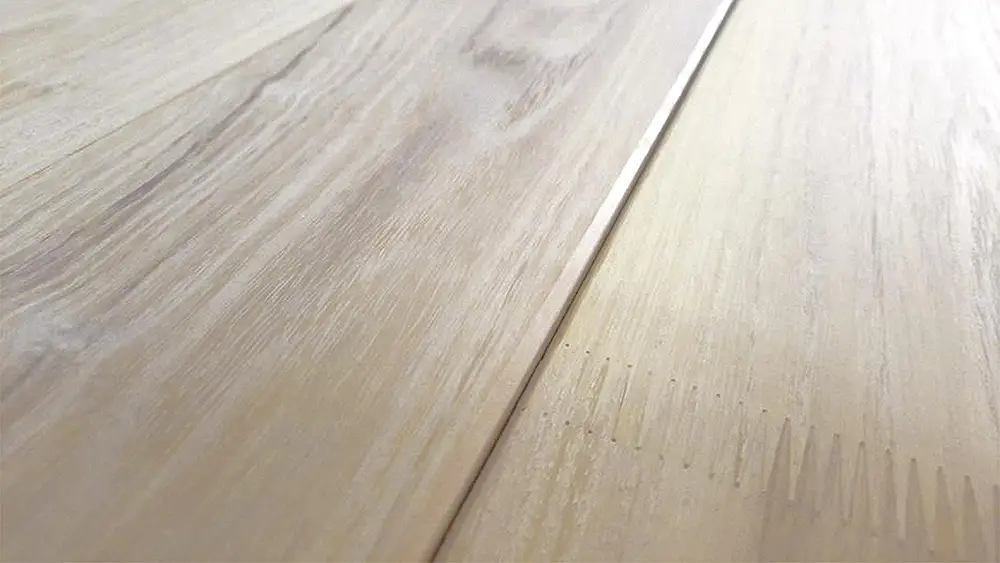
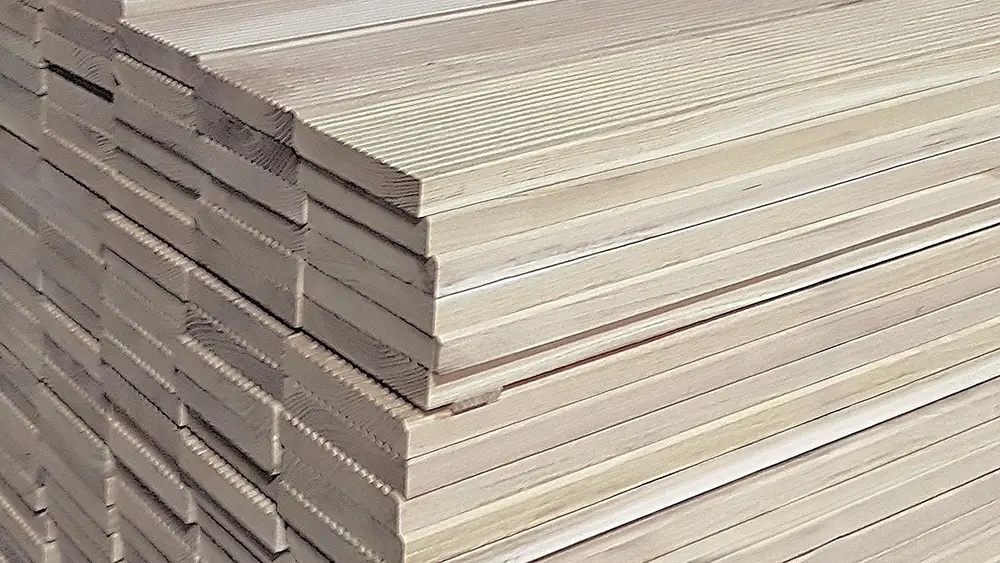
Finger-jointed Robinia decking boards are kiln dried (KD) to ensure the highest possible level of dimensional stability.
As high-quality decking timber made from Robinia, they are supplied in appearance grade A and are ideally suited for premium outdoor applications such as terraces, walkways and recreational areas.
Thanks to the natural durability of Robinia, the decking boards offer long service life and represent a sustainable alternative to tropical hardwoods.
Processing
– Planed and chamfered, smooth
– Planed and chamfered, grooved
– Planed, chamfered, smooth, cambered
– Planed, chamfered, grooved, cambered
Dimensions
– 23 x 120 mm, 23 x 100 mm, 23 x 90 mm, 23 x 80 mm
Length: 400-600 cm
Alternative processing
– Planed, chamfered, laminated
Dimensions
– 45 x 120 mm, 45 x 100 mm
Length: 600 cm
Other dimensions or special processing available on request. All products are also available with FSC® certification.
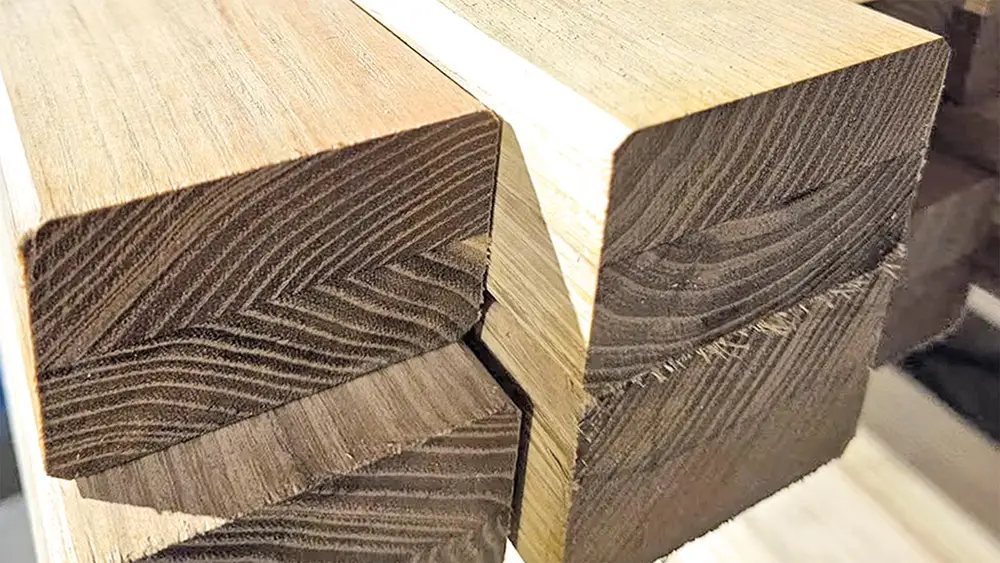
Robinia bench slats are manufactured from kiln-dried (KD), finger-jointed and waterproof bonded timber in appearance grade A.
They offer excellent dimensional stability, durability and weather resistance and are ideally suited for benches, outdoor furniture and seating areas in exterior spaces.
Processing
– Planed, chamfered, laminated
Dimensions
– 45 x 60 mm, 45 x 70 mm, 45 x 80 mm, 45 x 90 mm
– 60 x 60 mm
– 70 x 90 mm
– 80 x 80 mm
– 90 x 90 mm
Length: 400-600 cm
Other dimensions or special processing available on request. All products are also available with FSC® certification.
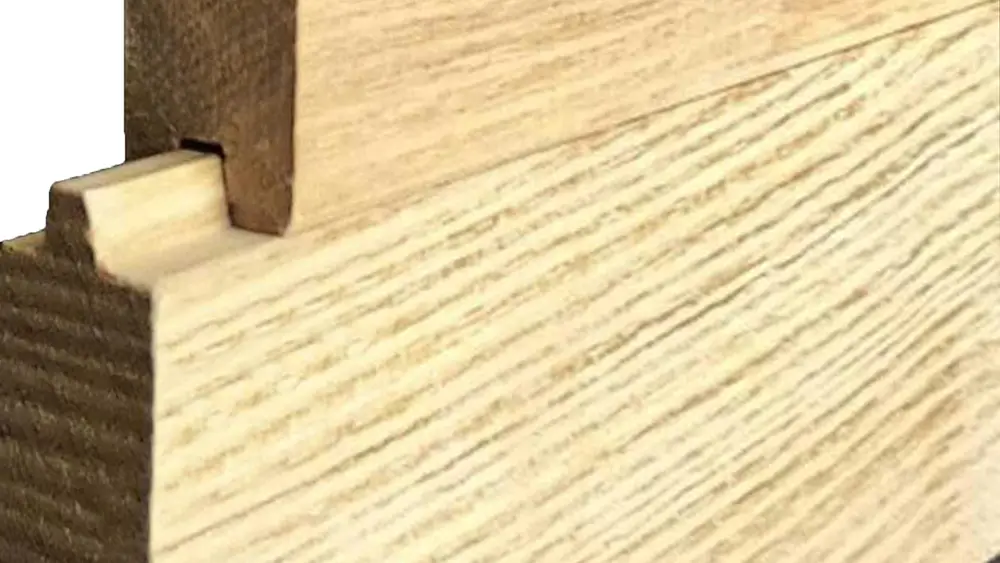
Finger-jointed Robinia cladding profiles with tongue-and-groove design are kiln dried (KD) to achieve high dimensional accuracy and form stability.
As durable Robinia cladding timber, they are ideally suited for weather-resistant timber façades and other vertical exterior cladding applications with high technical and design requirements.
Processing
– Planed and chamfered, smooth
Dimensions
23 x 63 mm, 23 x 82 mm, 23 x 100 mm, 23 x 110 mm
Length: 600 cm
Other dimensions or special processing available on request. All products are also available with FSC® certification.
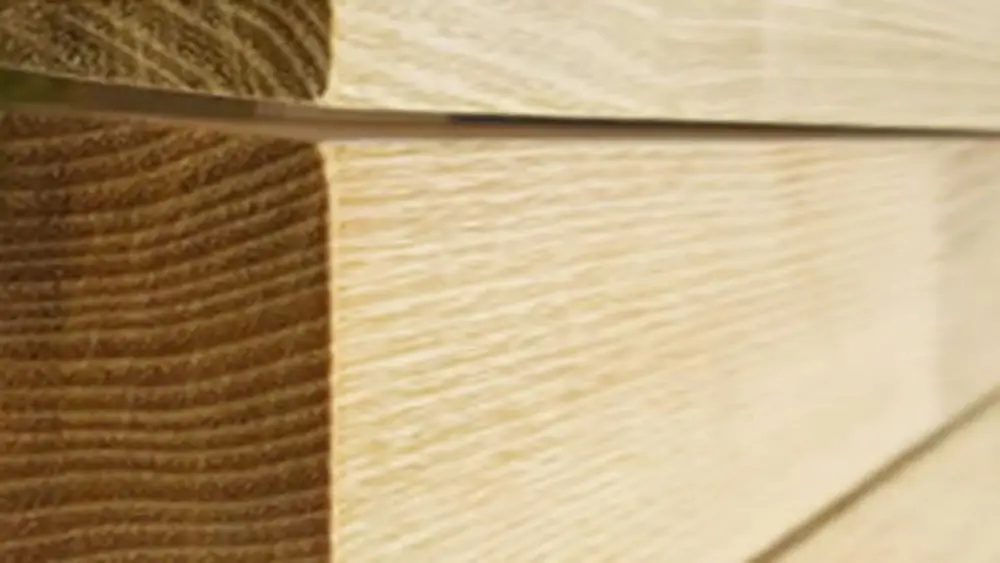
Robinia rhombus slats are finger-jointed, kiln dried (KD) and supplied in appearance grade A.
The rhomboid cross-section creates a dynamic play of light and shadow while ensuring effective water runoff, making the slats particularly weather resistant.
They are primarily used for façade cladding and privacy screens but are also suitable for architectural detailing in both exterior and interior applications.
Processing
– Planed, chamfered
Dimensions
23 x 82 mm, 23 x 63 mm
Other dimensions or special processing available on request. All products are also available with FSC® certification.
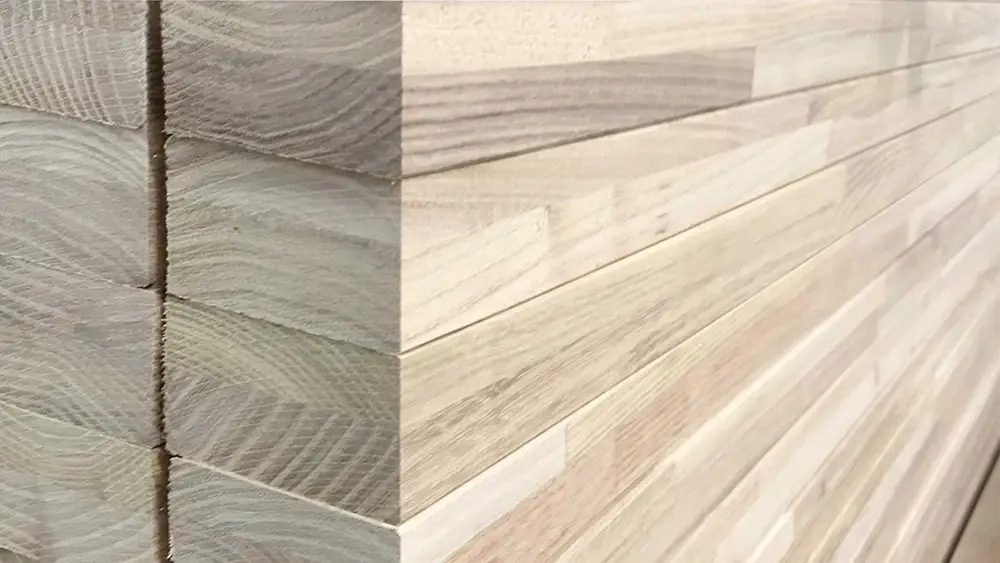
Robinia substructure timber is finger-jointed, kiln dried (KD) and waterproof laminated.
Due to the high natural resistance of Robinia, this substructure timber is ideally suited for terrace substructures, façade constructions and other permanently exposed outdoor applications.
It offers high structural stability, weather resistance and long service life – even without chemical wood preservatives.
Processing
– Planed, chamfered, laminated
Dimensions
45 x 60 mm, 45 x 70 mm
Length: 400-600 cm
Other dimensions or special processing available on request. All products are also available with FSC® certification.
Frequently asked questions – FAQ
Our answers to your questions about robinia wood products and our range. If you have any further questions, we’ll be happy to help you individually.
Which products do you have in your range?
We offer the full range of standard robinia products in all common dimensions and finishes. From roundwood and sawn timber to squared timber, posts, and fencing. We can also supply laminated robinia for decking, façades, and structural construction in the best quality.
In addition, we are happy to help you realize your individual requirements.
What does “finger-jointed glued laminated timber” mean, and where is it used?
Finger-jointed glued laminated timber refers to wood components in which individual lamellas are joined end-to-end using a finger-joint profile and then glued together.
This technique makes it possible to produce longer, dimensionally stable and accurate components from shorter pieces of wood, while maintaining the wood’s natural strength properties.
Finger-jointed glued laminated timber is used wherever defined lengths, uniform cross-sections, and high dimensional stability are required. Typical outdoor applications include substructures for decking, deck boards, façade profiles and rhombus slats, privacy screens, boardwalks and pathways, as well as bench slats for outdoor furniture.
It is particularly suitable for components that are permanently exposed to weathering while still requiring precise processing.
Is robinia wood available in playground quality at Q-Timber?
Yes. Our robinia wood for playgrounds meets the requirements of DIN EN 1176.
It is available in various sanding grades and is supplied entirely without sharp edges.
Feel free to ask us about forked trunks (Y-branches), root sections, or climbing trees as well.
What does KD mean?
KD stands for Kiln Dried.
Kiln dried refers to wood that has been dried in a kiln under controlled conditions. Unlike natural air-drying, the wood is dried in a targeted and accelerated process to reach a desired moisture content.
What does AD mean?
For robinia wood, the abbreviation AD usually stands for air-dried. This means the wood was not artificially dried in a kiln, but naturally dried in the open air.
What does Appearance Grade A mean?
Appearance Grade A for wood (also known as visual grading A) describes the visual quality of the wood surface. It stands for a smooth, uniform surface with a knot-free structure and a particularly high-end appearance.
What do edged and unedged mean?
Edged boards are cut straight and evenly, while unedged boards have natural, irregular edges.
What is sapwood, and what does “sapwood-free” mean?
Sapwood is the outer, usually lighter part of a tree trunk directly beneath the bark. It transports water and nutrients within the tree, is often softer, less durable, and more susceptible to insect or fungal attack than the inner heartwood.
When robinia wood is de-sapped, the outer, less durable sapwood is typically removed using special planing or milling machines, leaving only the highly durable heartwood. This makes the wood more long-lasting, more stable, and visually more uniform.
What do fixed widths and random widths mean?
Fixed widths
Fixed widths mean that the wood products are supplied in clearly defined, consistent widths. Each board or plank has the same pre-set width within a given tolerance.
This option is particularly suitable for projects that require precise planning and a uniform appearance.
Random widths (falling widths)
With random widths, the widths of individual pieces vary within a specified range. The widths result from the natural growth of the wood and are not sorted to a uniform width.
Random widths are material-efficient, create a natural look, and are often used when a rustic or more authentic appearance is desired.
Is Q-TIMBER FSC certified?
Q-Timber is FSC-certified. You can download the certificate here on our website.