Durability depending on application
Robinia wood is considered the most durable native European timber for outdoor use. This natural durability is due to its heartwood, which—thanks to its high density and natural extractives—is highly resistant to wood-destroying fungi. In contrast, the sapwood, formed by the younger annual rings, is significantly less durable.
In practice, this distinction is often simplified. Statements such as “30 years or more” only make sense when considered in relation to specific service conditions. The actual service life depends not only on the wood species but primarily on the application environment.
Above-ground use
In above-ground applications without direct soil contact, Robinia wood shows its highest durability. Service lives of several decades are realistic, provided that the design allows proper water drainage and avoids persistent moisture traps or cracks.
For façades, pergolas, fences, playground equipment, terraces, and other exterior components with constructive protection, lifespans of 30 to 50 years—and in favourable cases significantly more—are achievable.
In-ground use
In practice, failure rarely occurs in the soil itself, but rather in the soil–air transition zone, where alternating moisture and oxygen create ideal conditions for wood-degrading organisms.
For posts, fencing, and agricultural applications in soil contact, typical service lives range between 15 and 30 years. In well-drained, sandy soils, significantly longer lifespans are possible, while heavy or permanently wet soils may reduce durability.
Freshwater applications
In inland water construction, Robinia wood is used for bank protection, groynes, jetties, and ecological shoreline stabilisation. Its high durability, strength, and ability to perform without chemical treatment make it particularly suitable.
The key factor in underwater durability is the reduced oxygen availability, which significantly slows biological degradation. Combined with its high density, which limits water penetration, Robinia can achieve service lives of 30 to 50 years or more in freshwater environments.
Saltwater environments
In coastal and marine construction, conditions are significantly more demanding due to salt exposure, waves, tidal changes, abrasion, and marine borers.
Here, Robinia wood is mainly used for non-structural or replaceable elements such as walkways, decking, fencing, groynes, or wear components. Depending on exposure conditions, water level, and biological activity, service lives of 5 to 20 years are realistic. In less exposed zones above the waterline, longer lifespans may be achieved.
Mechanical stress
Mechanical loads such as impacts, cracks, or repeated movement can significantly influence durability by creating pathways for moisture ingress. In such cases, service life is often determined more by design and maintenance than by natural wood durability alone.
For highly stressed components such as playground equipment, heavily used decks, gates, or moving structures, lifespans of 15 to 30 years are typical, depending on maintenance and design quality.
Comparison with other timber species and ecological context
Compared to other European hardwoods such as oak, Robinia generally shows higher durability in ground contact. Softwoods such as larch or Douglas fir perform significantly lower in natural durability under similar conditions.
Even compared to many tropical hardwoods, Robinia can achieve equal or better performance in numerous applications. However, a key difference lies in origin and environmental impact. While tropical hardwoods are often associated with deforestation risks, Robinia is widely available in Europe and can be sourced from sustainably managed forests.
From this perspective, Robinia wood is not only a technically sound material but also an ecologically responsible alternative, helping to reduce transport distances and pressure on tropical forests.
Conclusion
Robinia wood is not an indefinitely durable material, but it is among the most durable European hardwoods for outdoor applications. Its service life strongly depends on the application environment and can range from shorter lifespans in transition zones to several decades in above-ground or freshwater conditions.
Practical service life overview:
– Above ground: approx. 30–50+ years
– In ground: approx. 15–30 years
– Freshwater: approx. 30–50+ years
– Saltwater: approx. 5–20 years
– High mechanical load: approx. 15–30 years
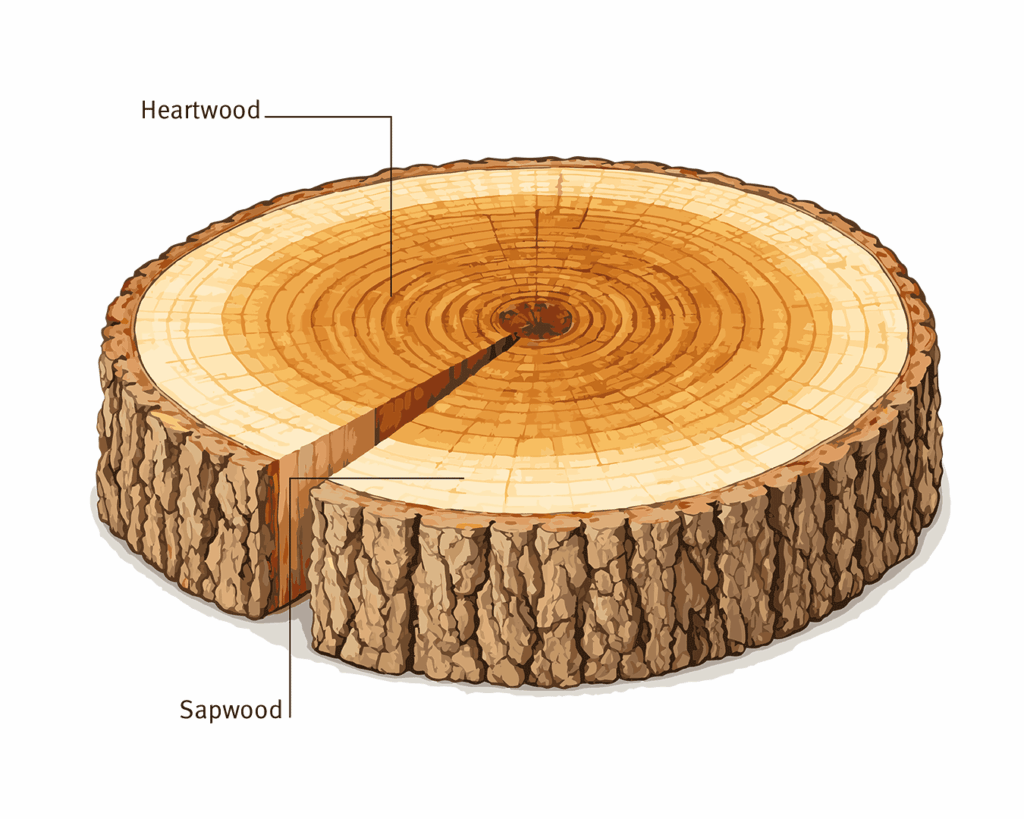
Sapwood vs. heartwood: products with higher heartwood content achieve significantly longer service life.
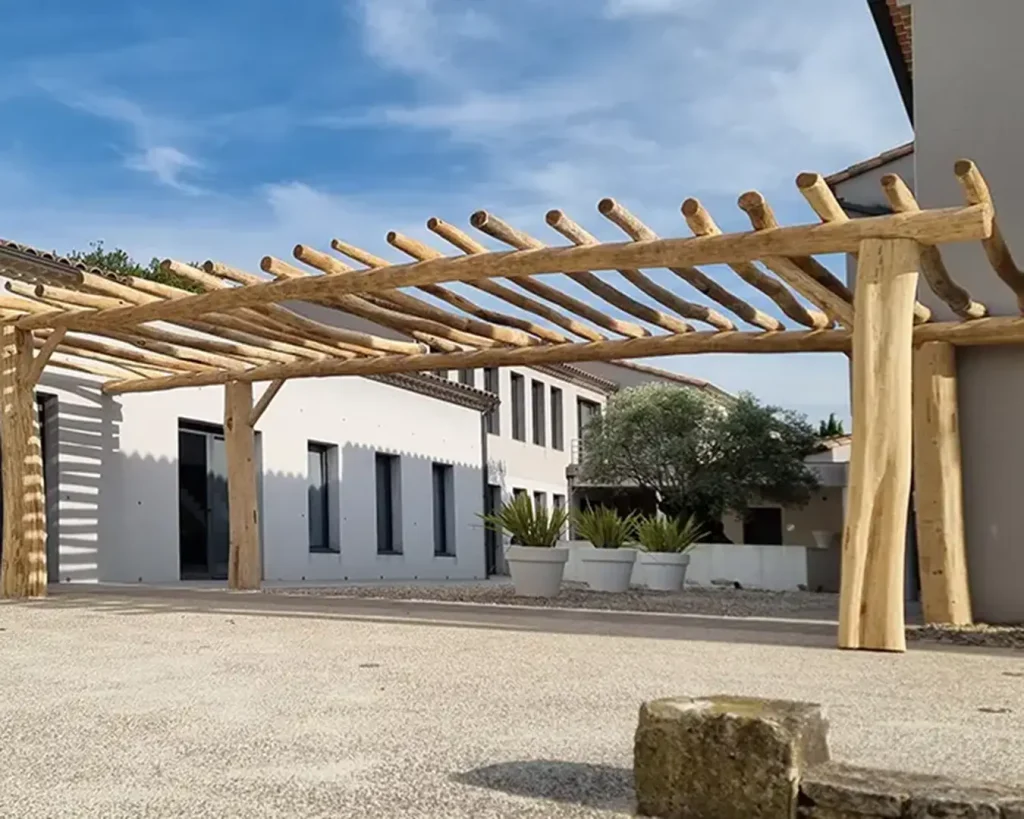
Above-ground applications typically reach 30–50+ years.
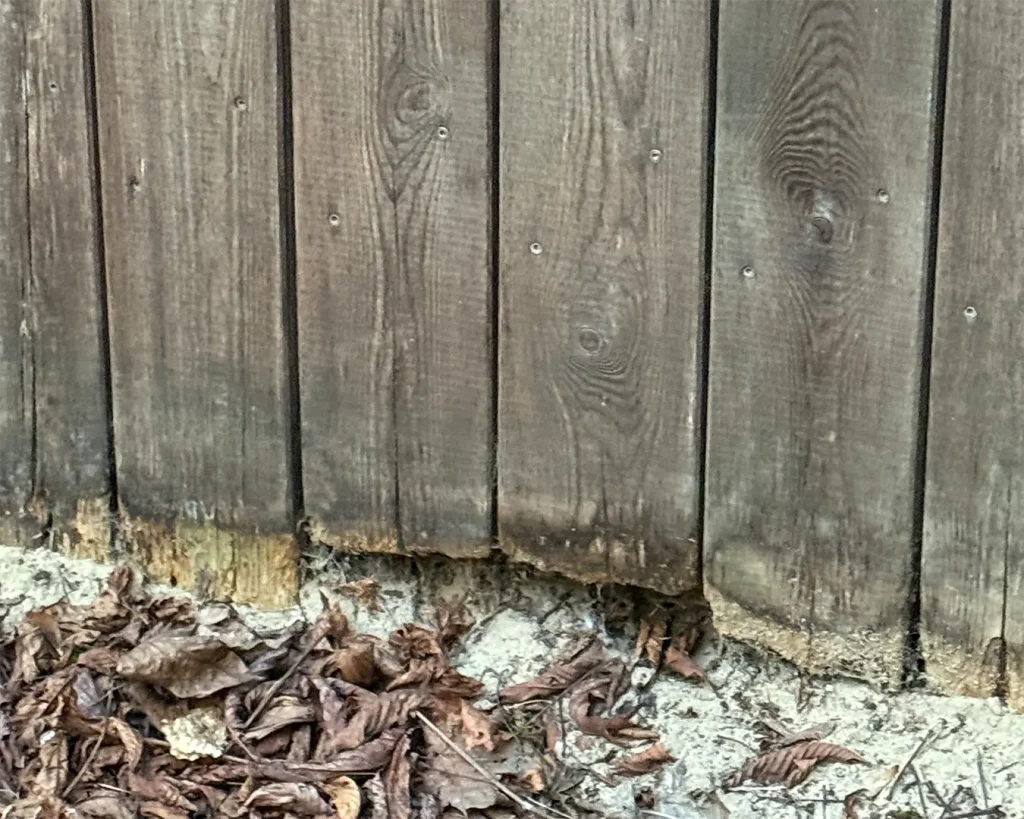
Decay typically begins in the soil–air transition zone.
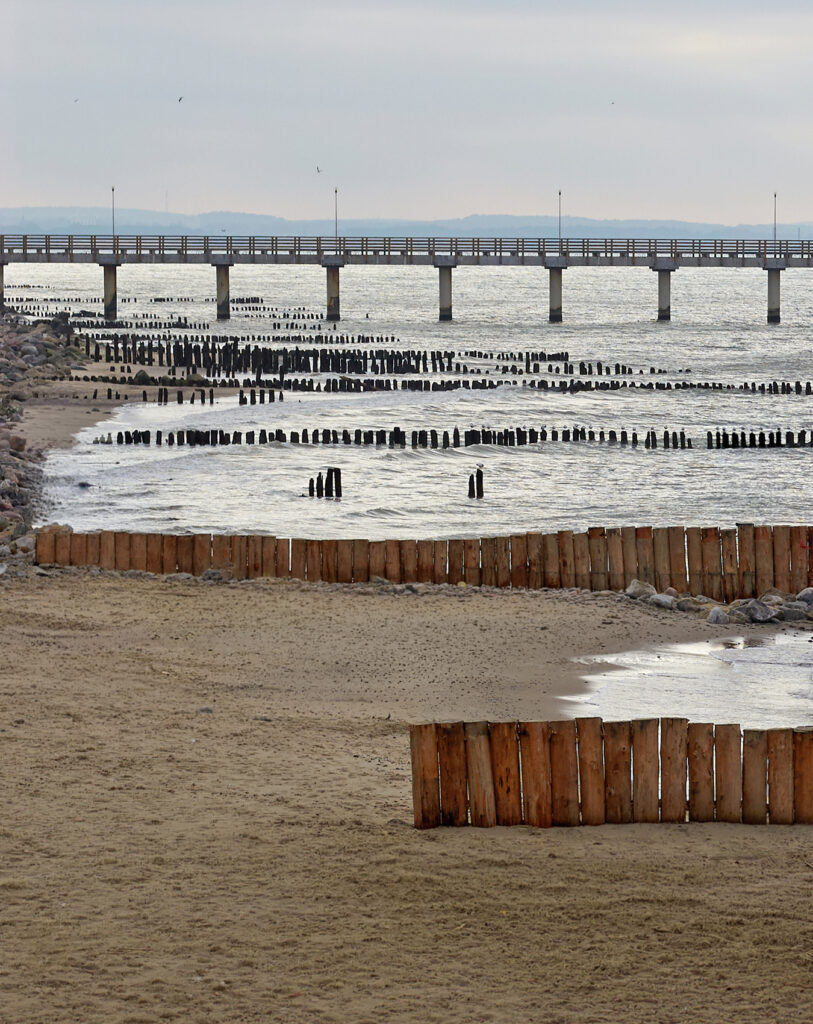
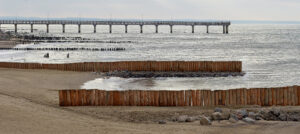
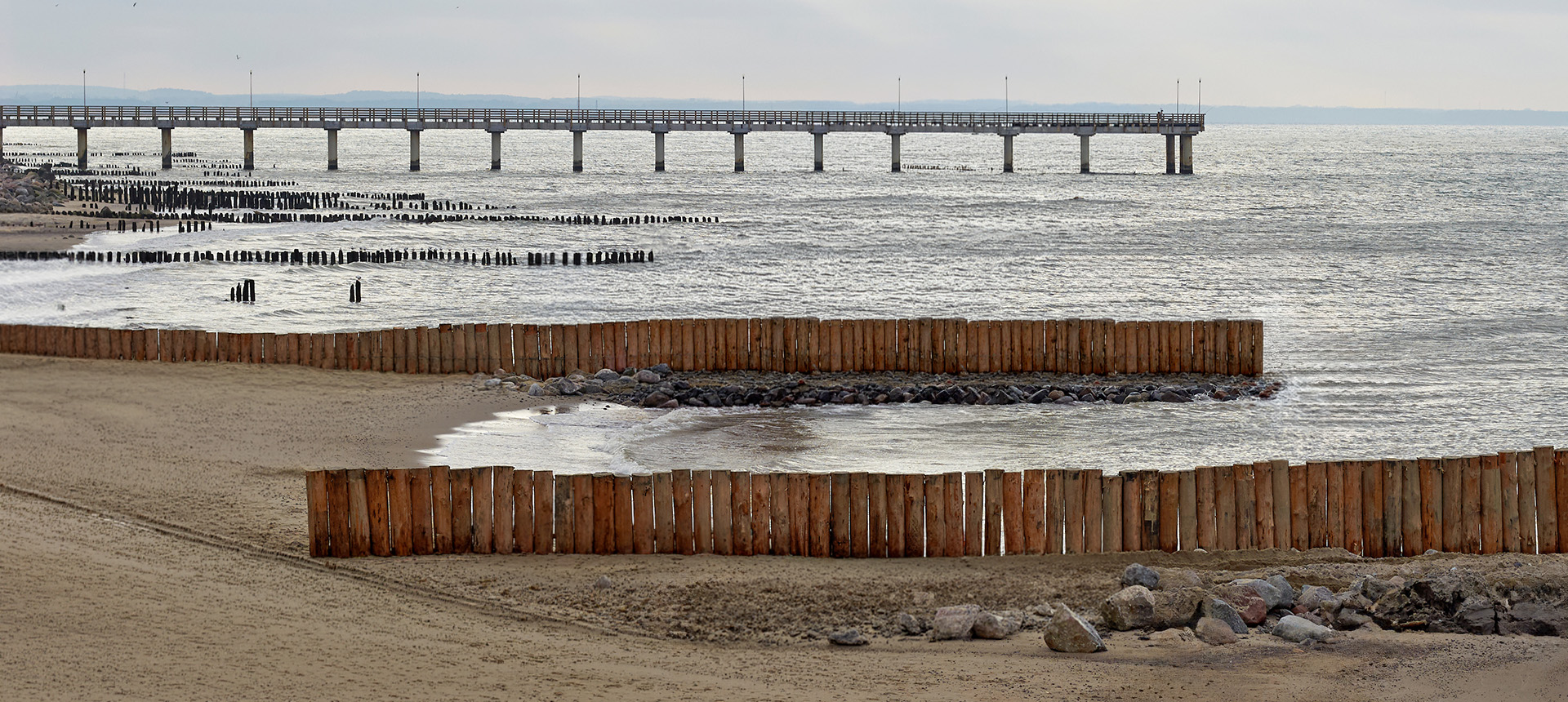
* Robinia wood in coastal protection applications.