Best Conditions for High-Quality Robinia Wood
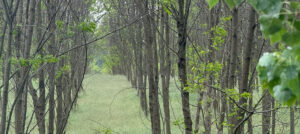
The black locust (Robinia pseudoacacia) was introduced to Hungary around 300 years ago and has been actively promoted since then. Today, a significant share of Hungary’s forests consists of Robinia stands. The country’s climate and soil conditions provide ideal growing conditions for this tree species. Warm summers, relatively dry sites, and suitable soils enable the production of particularly high-quality, straight-grown Robinia wood, which is ideally suited for outdoor applications.
Preconceptions and Reality
When it comes to timber from Central and Eastern Europe, terms such as overexploitation, clear-cutting, or lack of control are often mentioned. The idea that nature conservation is exclusively a Western European concern remains surprisingly persistent. It is also frequently assumed that non-FSC-certified wood automatically originates from less sustainable forestry.
Our experience on site paints a more differentiated picture.
Our Exchange with Hungarian Producers
During our visits to Robinia wood producers in Central and Eastern Europe, we do not only discuss quality requirements, supply reliability, product range, and technical aspects of processing. Equally important to us are working conditions, wood origin, and the legal framework of forest management.
Our Hungarian partners have shown us that forestry in their country is subject to extensive legal regulations and state supervision. These rules cover sustainable forest use, reforestation measures, the protection of valuable habitats, and the long-term preservation of forest resources.
According to our partners, certain legal requirements in some areas even go beyond comparable requirements within certification systems. Regardless of this, one thing became very clear: the assumption that forests are managed irresponsibly or without control in the absence of FSC certification does not reflect reality.
The Role of FSC
FSC has developed into an important international standard in recent years. In Western Europe, FSC-certified timber is increasingly required in public tenders, municipal projects, and large construction developments.
It is important to understand that FSC does not replace national forest laws. Instead, the certification system builds on existing legal frameworks and adds further requirements, such as documentation, traceability, transparency, and independent audits.
FSC therefore provides an additional layer of verification for customers and project partners who require traceable supply chains.
FSC Is Also Becoming More Important in Hungary
The growing importance of FSC in Hungary is reflected in the introduction of a new national FSC standard in 2026. This standard is based on international FSC sustainability requirements while also building on Hungary’s existing legal forestry framework.
It strengthens the protection of high conservation value areas, improves traceability of wood products, and increases transparency within supply chains.
For us, this development highlights an important point: the discussion should not be framed as “FSC versus non-FSC.” Instead, it is about continuously improving and verifying responsible forest management.
Why FSC-Certified Robinia Wood Is Not Always Immediately Available
Many Hungarian producers are responding to increasing demand from Western Europe by investing in FSC certification. However, this process involves additional administrative work, documentation requirements, and regular audits – and therefore additional costs.
As a result, not all producers currently hold FSC certification, even though they manage their forests in accordance with applicable legal requirements.
For customers requiring FSC-certified Robinia wood, we are able to supply corresponding material. However, depending on product type and market conditions, longer lead times may occur. FSC-certified material cannot simply be substituted with non-certified sources. If a certified producer is fully booked or supply bottlenecks occur, fewer alternative sources are available.
Thanks to our long-standing partnerships, we work with reliable FSC-certified suppliers and are able to serve FSC-based projects accordingly.
Conclusion
From our perspective, sustainability is not solely a question of certification. FSC is an important and valuable standard that provides additional transparency and assurance and is indispensable in many projects today.
At the same time, the absence of FSC certification does not automatically mean that timber comes from uncontrolled or unsustainable forestry. Hungarian forestry is subject to extensive legal regulations and state supervision. Responsible forest management begins in the forest – not at the certificate.
That is why we focus on knowing our partners personally, tracing the origin of our products, and offering both FSC-certified and responsibly sourced Robinia products.
Europe’s largest Robinia forests
Around 22% of Hungary’s land area is forested. Robinia plays a particularly important role: approximately one quarter of Hungary’s forest area consists of Robinia stands. This makes Hungary home to the largest contiguous Robinia forests in Europe.
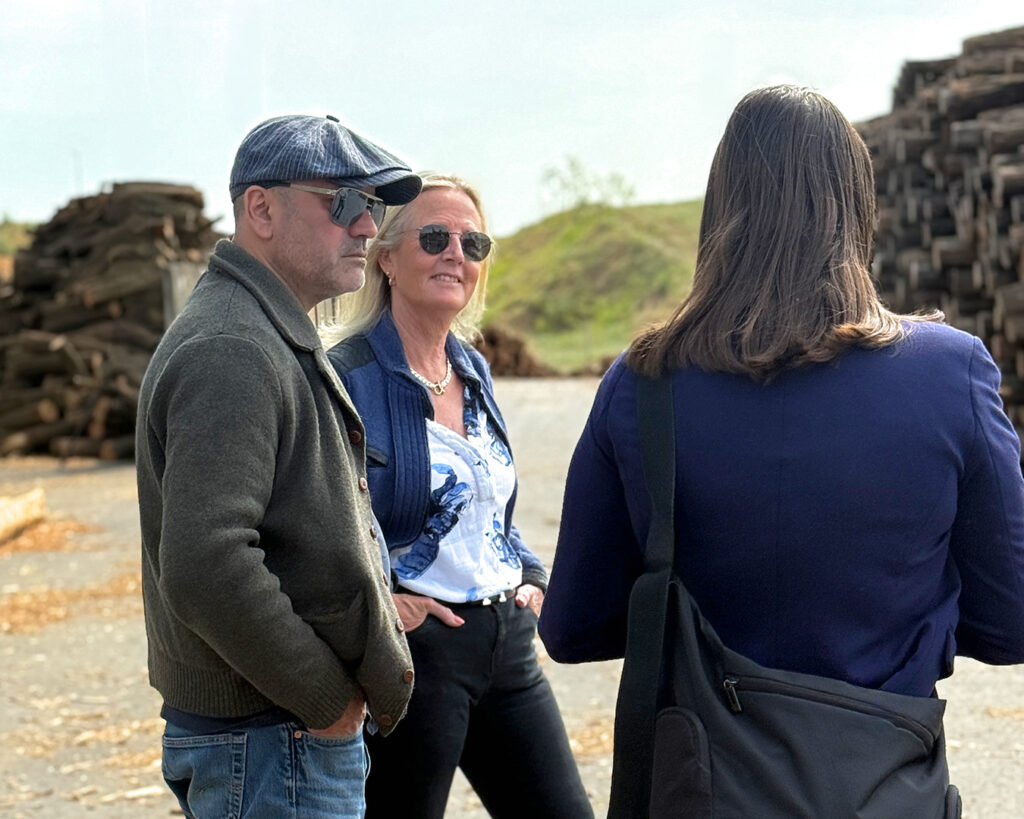
Exchange with a Hungarian Robinia wood producer
Direct dialogue on site creates transparency regarding origin, quality, and production conditions.
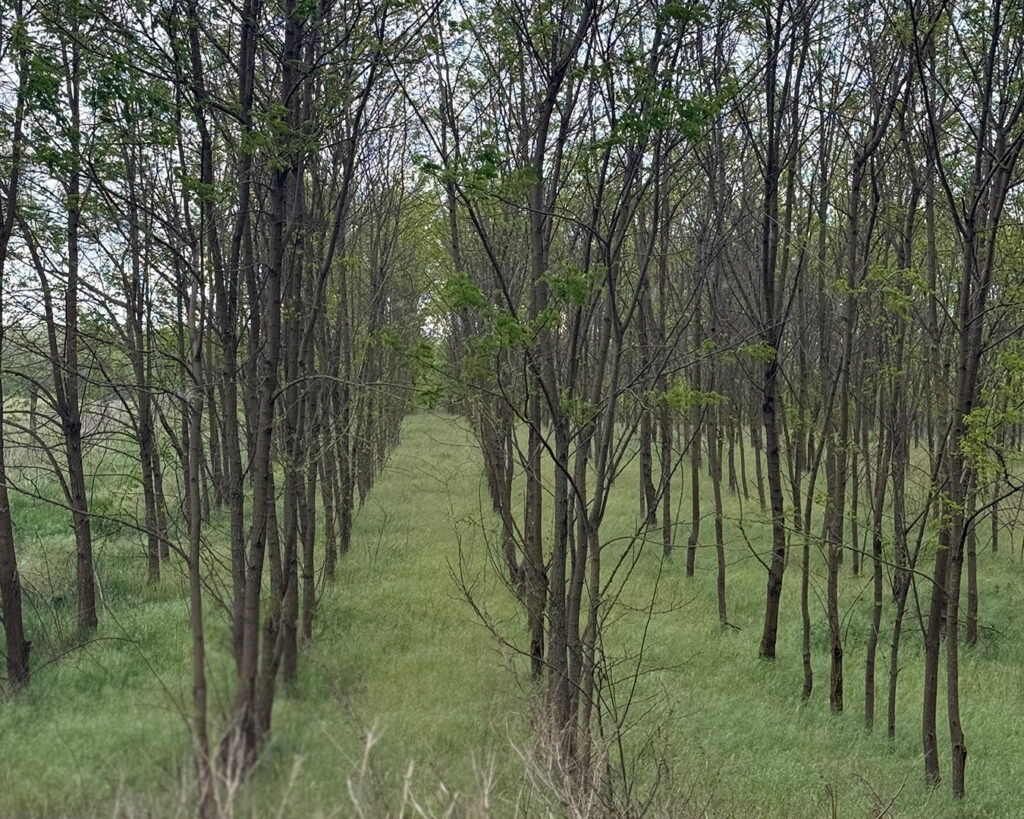
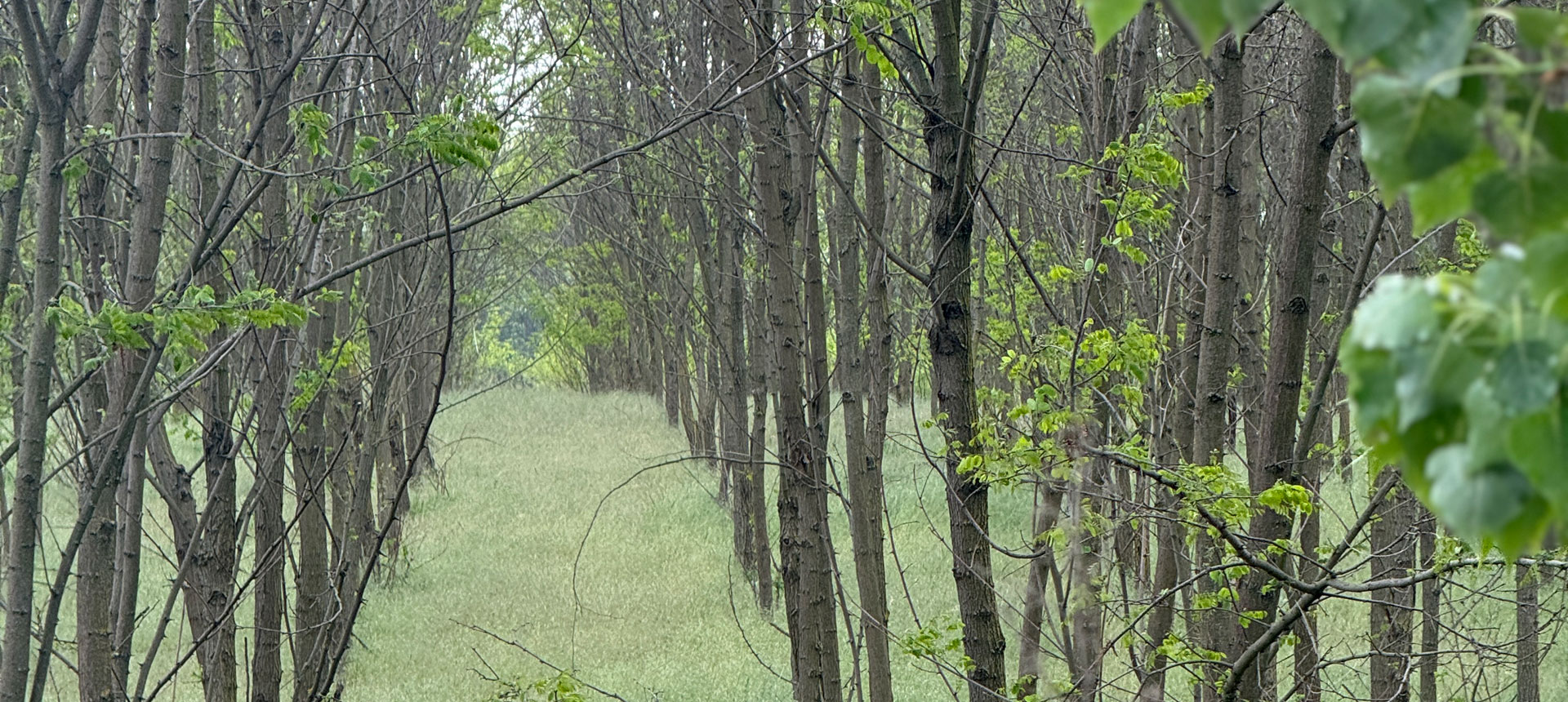
Young Robinia stand in Hungary
The long-term development and conservation of forests are central both to national forestry regulations and modern certification systems such as FSC.
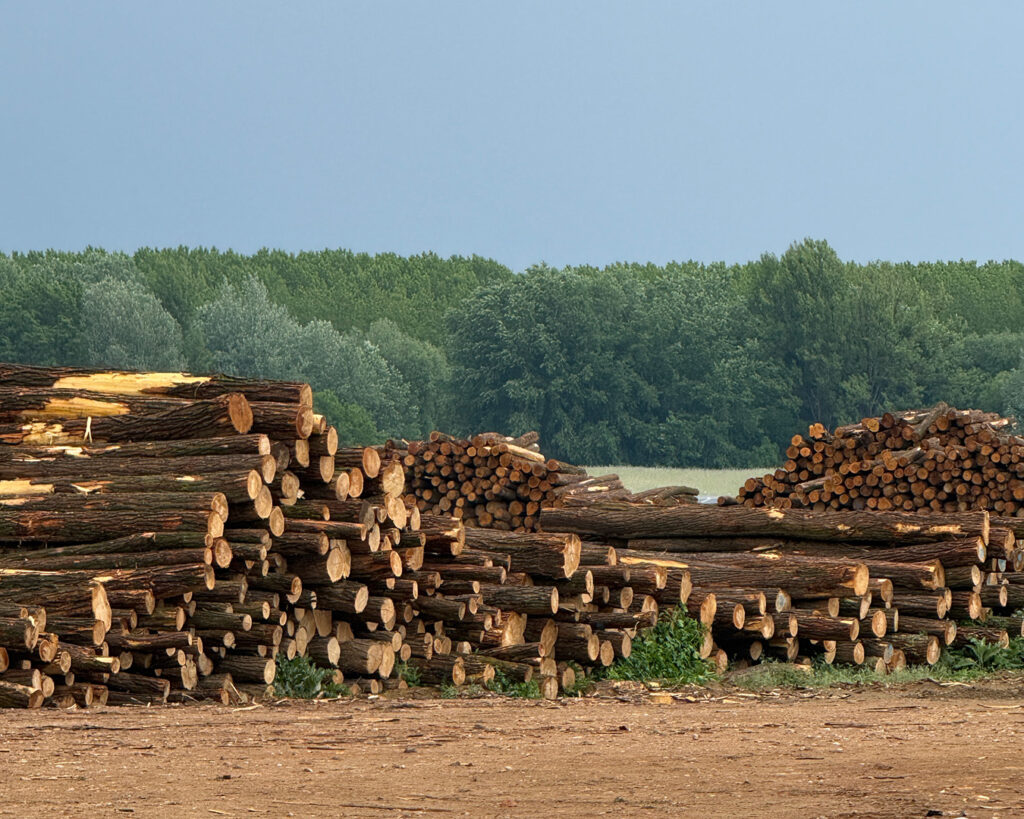
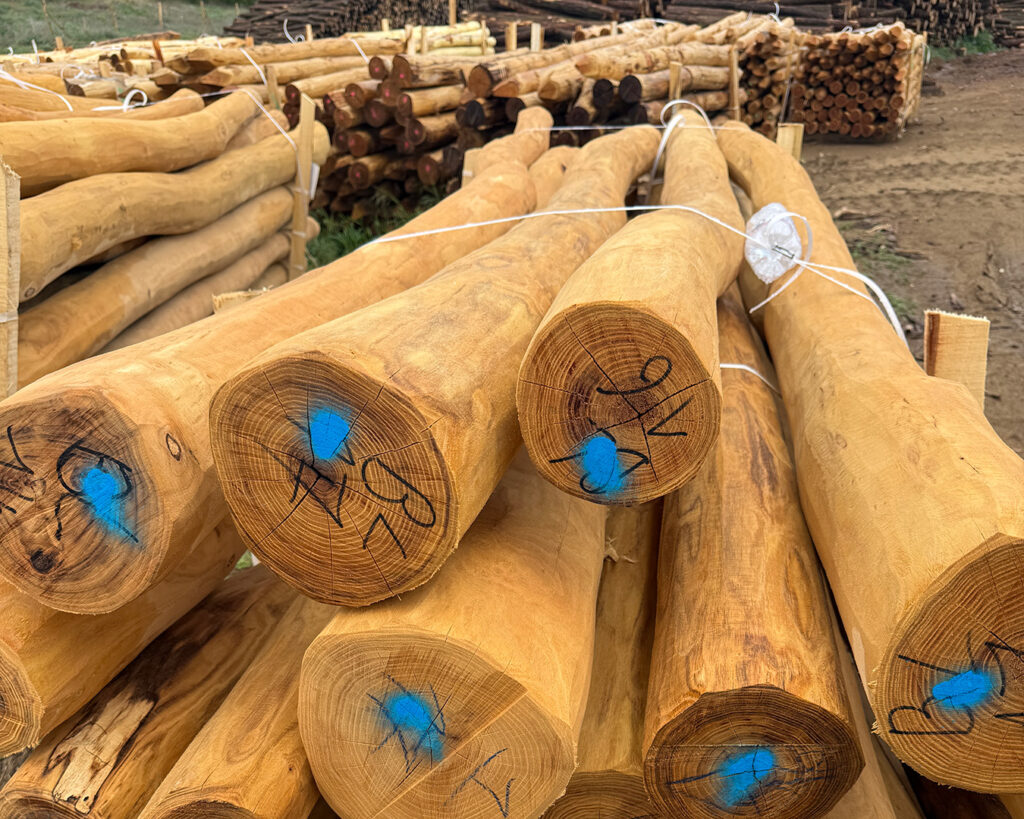
Robinia logs in the storage yard of a Hungarian producer
FSC certification is also becoming increasingly important in Hungary’s timber industry.